25 years of business ownership—about as long as the gap between Tool albums.
I’ve devoured countless ‘lessons learned’ posts, searching for the secret to a perfectly balanced business and personal life. Hoping for frictionless days, rivers of cash flow, and the biggest challenge being which 5-star restaurant to indulge at for lunch.
That’s not the reality for small business owners. It’s whitewater, and you’ve been handed a raft with numerous punctures, a paddle that’s bent at a 70-degree angle, and you’re about to launch your craft into the Maelstrom River. I’ve stood up a business in the construction industry for 25 years, and I want to share some lessons I’ve learned the hard way, navigating the treacherous Maelstrom River.
Lesson 1: You don’t have to scale. (Or, up yours, capitalism)
I’ve been a company of one, and I’ve had up to 18 employees. I have a current headcount of 13, and I’m not looking to add to it. It still cuts me hard that I had to make people redundant in 2018 when I took my eyes off the balance sheet and faced a health crisis. I’d grown too quickly, too soon, without a leadership and adviser team to support me. I was also spending most nights awake, gripping onto the floor, having another anxiety attack wash over me as I white-knuckled my way through the overwhelm. The shame of making people who depend on you and your business to pay for groceries, their mortgage, and child care sticks long after the employee has exited. These days, I’m cautious in my approach to growth. It’s not only the financial cost you need to weigh up when it comes to employing staff, but it’s also the energetic load as well.
Considerations such as “Do I have time to mentor them and help them develop as a designer?” “Do I have the capacity to have them work alongside me and observe how I have hard conversations?” “Does the team have the capacity to spend time with them and help them understand the company culture?” All need to be factored in.
Chasing revenue for its own sake is highly overrated, too. I’ve learned that the potential new client or supplier that has more red flags than your average Ferrari F1 Fan Day is best left to find another business to mess with. If they are tardy with responses, flaky with payment terms, or resistant to your advice, bid them a fond farewell. Any money you manage to claw out of them will be spent on paying for therapy sessions and an energetic clearing from a Feng Shui Master.
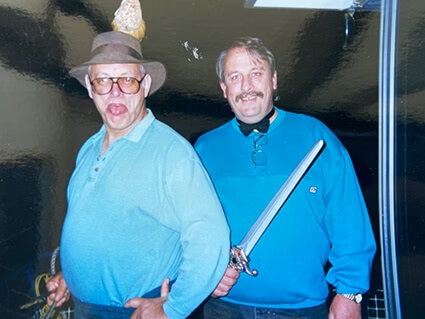
Two legends who gave me my start in the industry, Derek Hopper (left) and Gary Porter (right). Rest in Power
Lesson 2: Screw the vanity metrics of “I made 7 figures!” What’s your profit, mate?
It’s the fashion these days to crow about your 7 / 8 / eleventy one hundred-figure business. This is pure marketing to lure you into buying what they’re selling. Better than making money in the business is making a profit. And by profit, I mean the good stuff that’s left after paying all your supplier invoices, tax liabilities, overheads, wages (including your own!). To take on the risk of owning a business, you must be pulling a healthy profit. I was lucky that I’d been making a profit in the years before Covid and had kept the funds in the business rather than take them as dividends. It meant that Diva Works could cross the badlands of Covid with a war chest built up on the balance sheet from previous years’ profits, without the lockdowns and quieter business conditions gutting and filleting us.
I also want to emphasise this point: having a business is risky. Your success, return on investment, and client payments are not guaranteed. Even with the most water-tight of contracts, if a client decides they are not going to pay or they go to the wall, you carry the can. You’ll need to pay your wages, the Tax Office, business expenses, and sub-contractors, but without the funds you were expecting. Profit is the sign of a healthy business, and in these (still, ongoing) uncertain times, you want to deal with a financially stable business that represents a safe pair of hands.
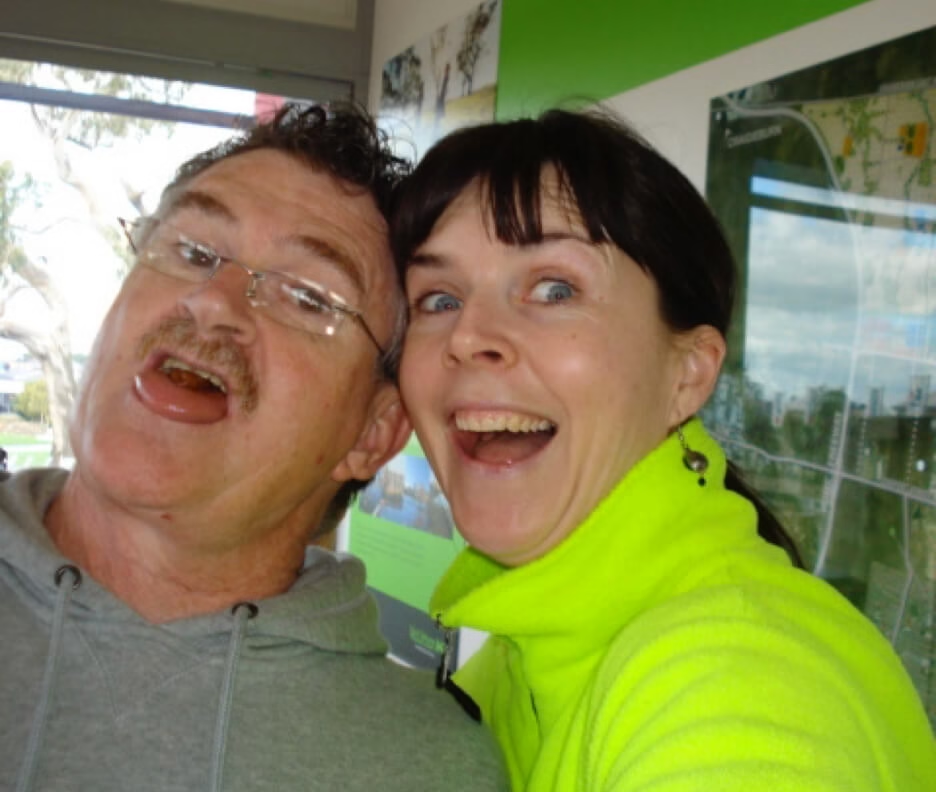
With a great supporter of early Diva, the mighty Bob Clinch
Lesson 3: Pay your suppliers within 30 days.
Post-GFC, it came as a massive shock to me that I not only owned a small business but also, apparently, a bank. I received a letter from a major supplier to the construction industry stating that their payment terms were changing from 30 days to 60 days from the end of the month due to unprecedented economic conditions. No negotiation, no personal call to discuss options, no thoughtful gesture to soften the change—just a generic form letter outlining “their new terms.” The kicker? This was in the same year the company posted a $126 million profit. I suppose using suppliers to extend a minimum 60-day, interest-free line of credit pays off for management bonuses and shareholders who’ve never been strung out by a client that conveniently “loses” your invoice when EOM + days comes around, and the timer resets. Good times.
I’d like to think that the suppliers I use think I’m a pretty good person with excellent taste in music, but in reality, I know they like dealing with the Divas and me because I pay out bills on time. We do not use our suppliers to fund our business, nor jerk them around if they are strapped for cash and need payment before the due date.
Good businesses, large and small, are suffering from poor cash flow. They can’t reach anyone in accounts to resolve issues. Support is outsourced overseas, and calls go unanswered. The construction industry is notorious for delaying payments to suppliers, and this must end.
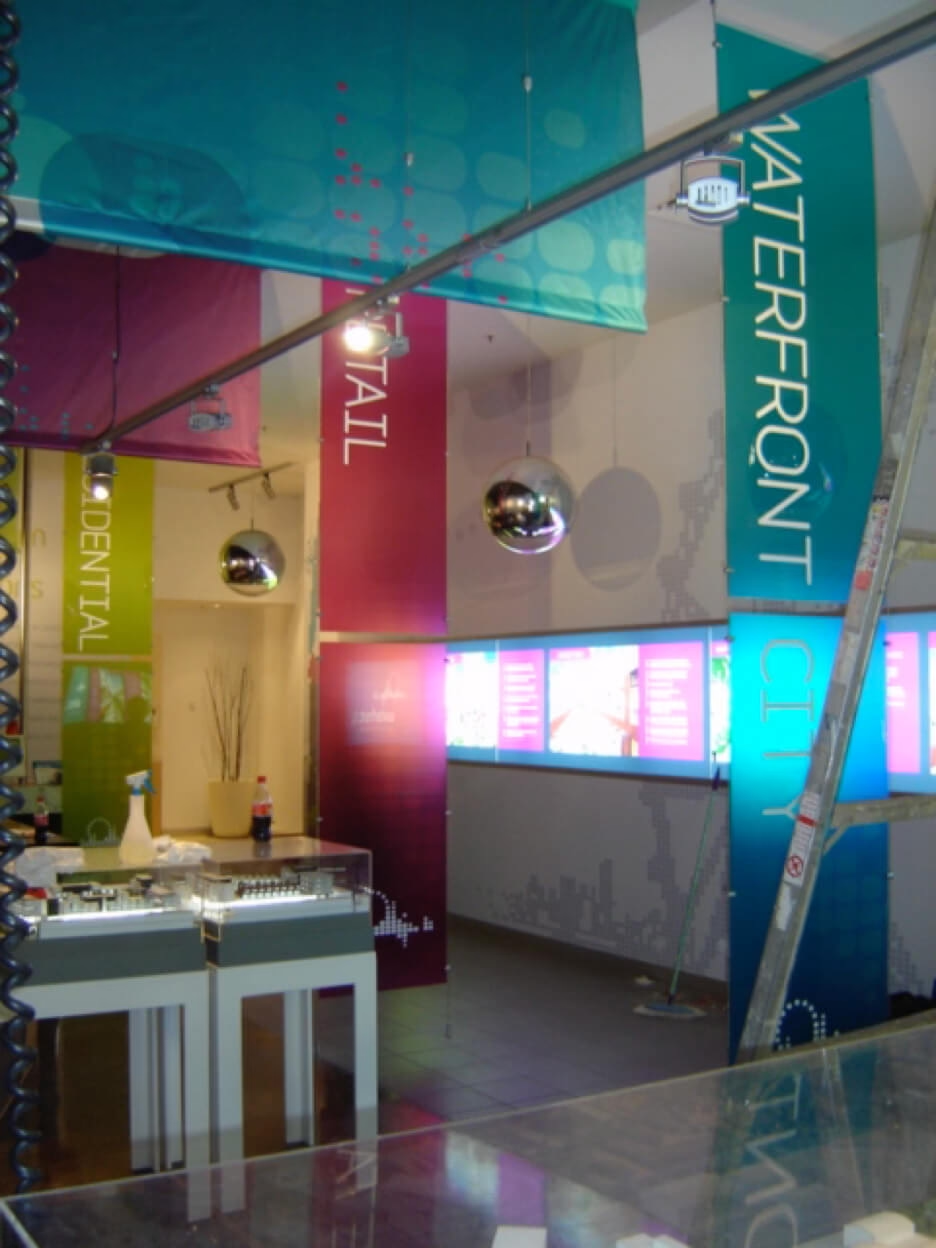
One of my first sales offices: Waterfront City for ING
Lesson 4: Gather a support crew around you that is fit for purpose.
I came to this realization way too late in my business journey. I thought I had to understand the balance sheet, how to have hard conversations naturally, and how to set up employment contracts that were meaningful for both the employee and Diva. I was ashamed that I knew none of these things, and they did not come naturally to me. I started Diva Works back in 2001 when I saw a gap in the property market for good design and awesome project management that could combine to create the most amazing sales offices that could sell-out developments. Oh, and I also wanted to create a business where I could listen to rock music all day while knocking out designs or quoting fit-outs. Nowhere in my very scan business plan was “Understand the intricacies of a design and construct contract”. Real talk, I have a very, very narrow talent range. I’m good at design direction, I’m better at project management, but I really excel at finding solutions to sticky problems. Everything else, and I’m flapping around like a fish on a beach.
That’s where the support crew comes in. I hire for missing talent. SEO? I have an excellent supplier. Understanding the cash floor? I have a brilliant virtual CFO. Improving communication with the Divas and setting boundaries? No problem—I have a specialist in those areas. Business owners must wear many hats, but hire specialists for anything outside their genius zone.

Another rocket from the crypt: The first Aurora sales office for VicUrban
Lesson 5: Be a good human.
I make hundreds of decisions in my business every day. Most pass by like ticker tape at the bottom of a TV news screen, but others? You’re left tossing up the best path to take. When it comes to those weighty decisions, I’ve found the best determinant is: what is the kind choice here? Now I’m not only talking about kindness to others but also kindness to oneself. If I know that I will rue taking the easier / least costly decision because I’ll go over the decision mentally for days, no question, I’m kind to my mind and go for the harder / more costly because I have to live with myself and my decisions, and a fitful sleep free of a brain that is beating you up is a magical thing.
Business is relationships. You’re dealing with people, and you have to see the human behind the quote, the project, the design, and the contract. A recent thing I’ve been doing is giving people the benefit of the doubt. It’s easy too to believe the worst and think “this person is evading me / being duplicitous /is disappointed with our design”. I now choose to live in the 51 percent and believe the best. It will work out. They have not called because they, too, are under the pump. They have not signed off on the quote as they have not had a chance to speak to their manager. I tell you, the 51 percent space is very calm, full of grace for others and yourself. Please, feel free to come and dwell with me there.
Wherever you are on your business trip or career ladder, remember you’re your own best source of wisdom. Trust your kindness and grit to make good decisions as you navigate the whitewater of business.
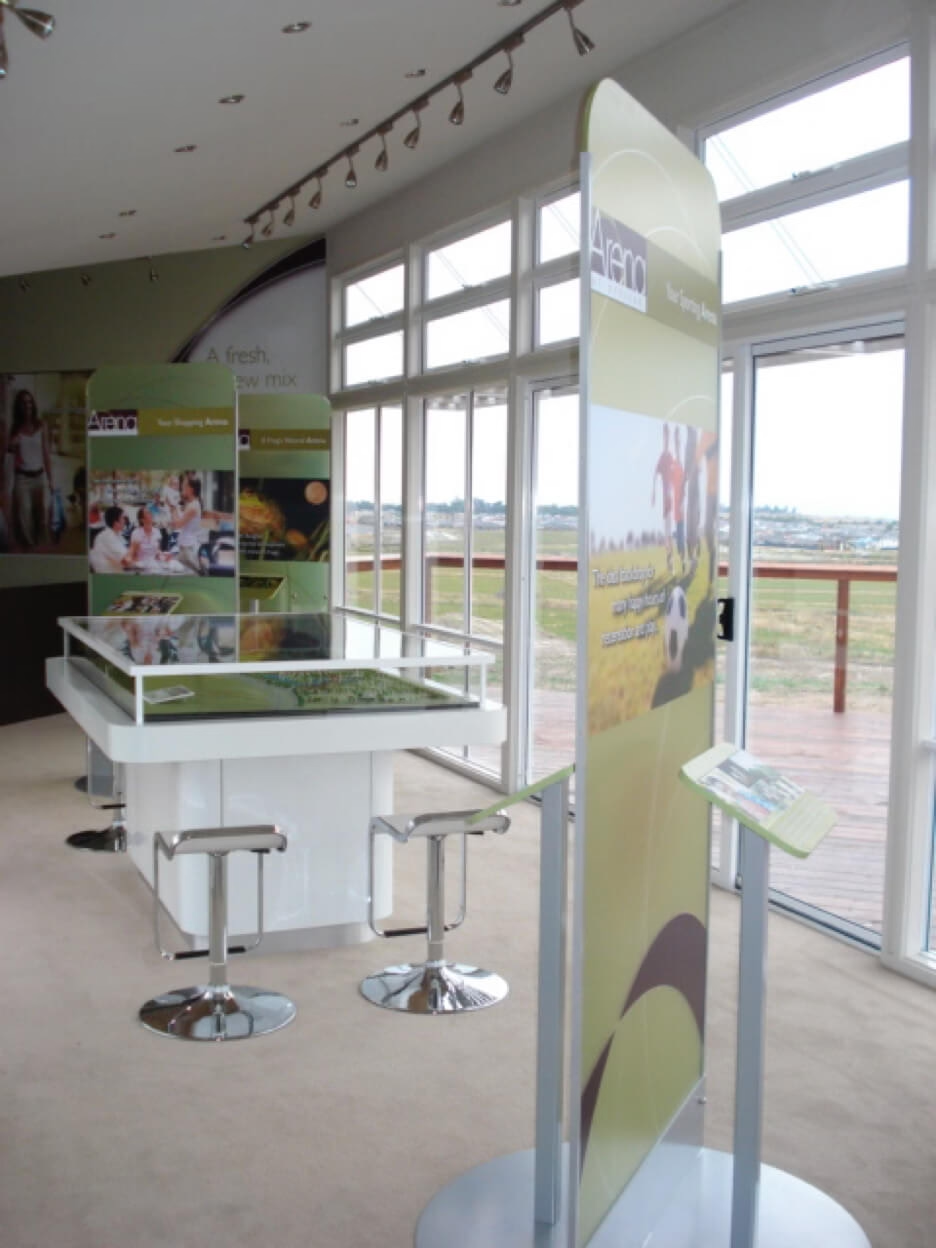
From ye olden days: Arena Sales Office for AV Jennings